How to calculate how much paint you need
Paint coverage comes down to wall area ÷ coverage rate × coats. Measure the length and width of the room and the wall height in feet. Add the lengths of all four walls and multiply by the height to get total wall area, then subtract the openings — doors and windows you aren't painting.
- Wall area = 2 × (length + width) × height
- Paintable area = wall area − (doors × 21) − (windows × 15)
- Gallons = paintable area × coats ÷ 350, rounded up
A standard interior door is about 21 square feet and an average window about 15. If your openings are unusually large, adjust the count up to match.
The paint trick the pros never skip
Paint color varies just enough from can to can that you'll see a faint seam on the wall where you switched cans — especially on a big wall. The fix the pros use is called boxing: pour all your cans into one large bucket and stir them together, so every roller-load is the exact same color.
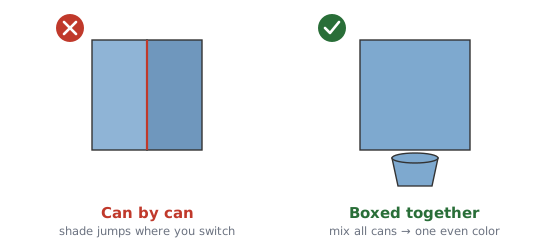
That's also why it pays to buy all your paint at once — figure the whole job here, pick it up in one trip, and box it together for a flawless, even finish.
Pro move: always plan for two coats. Most colors need them and a single thin coat rarely covers — the calculator already assumes two.
How many coats of paint do you need?
| Situation | Coats |
|---|---|
| Same color, freshening up | 1 coat |
| New color, similar shade | 2 coats |
| Dark over light (or light over dark) | 2–3 coats |
| Bare drywall or patched walls | Primer + 2 coats |
Two coats is the safe default for most repaints. Big color changes and porous surfaces drink more, so plan for an extra coat.
How much area does a gallon of paint cover?
A gallon of interior wall paint covers roughly 350 square feet in one coat on a smooth, primed surface. Rough or textured walls drop closer to 300, and primer covers about 250. The calculator uses 350 per coat — round up so you aren't caught short mid-wall.
Paint calculator FAQ
- Does this include the ceiling?
- No — this estimates the four walls only. Ceilings are figured separately as length × width, divided by the same 350 sq ft per gallon coverage.
- How much paint for trim and doors?
- Trim, doors and windows are usually a different finish, so they're a separate purchase. A quart covers the trim in an average room; a gallon does several rooms.
- Should I add extra for touch-ups?
- Yes — keep a little. Rounding gallons up usually leaves enough, but saving the leftover for nicks and scuffs is worth it.