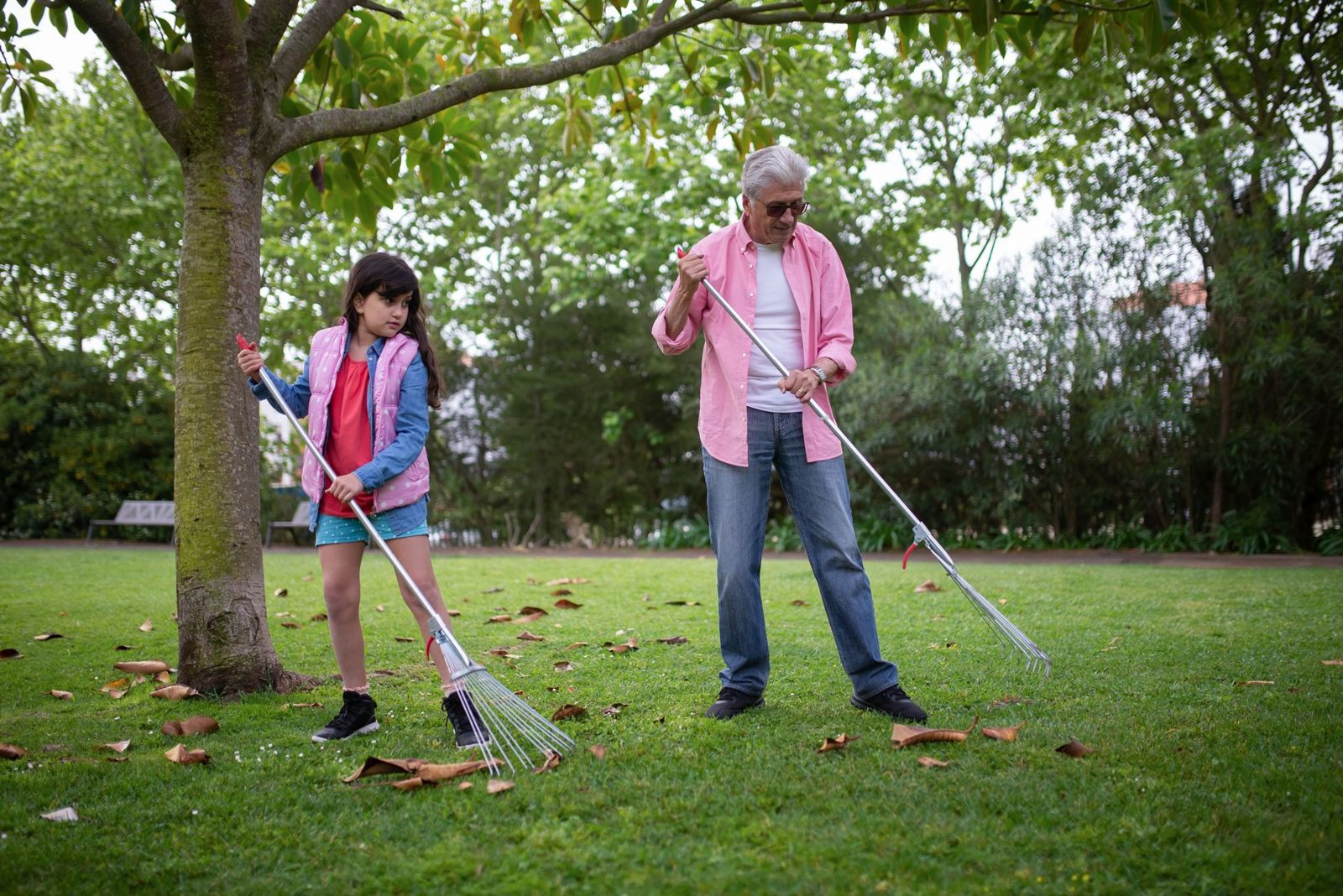
You don’t need a bare, manicured lawn — you need to keep the grass from smothering under a wet mat. Here’s whether to rake, blow, or mulch-mow (spoiler: mulching wins), the right tools, and how to turn the rest into free soil.
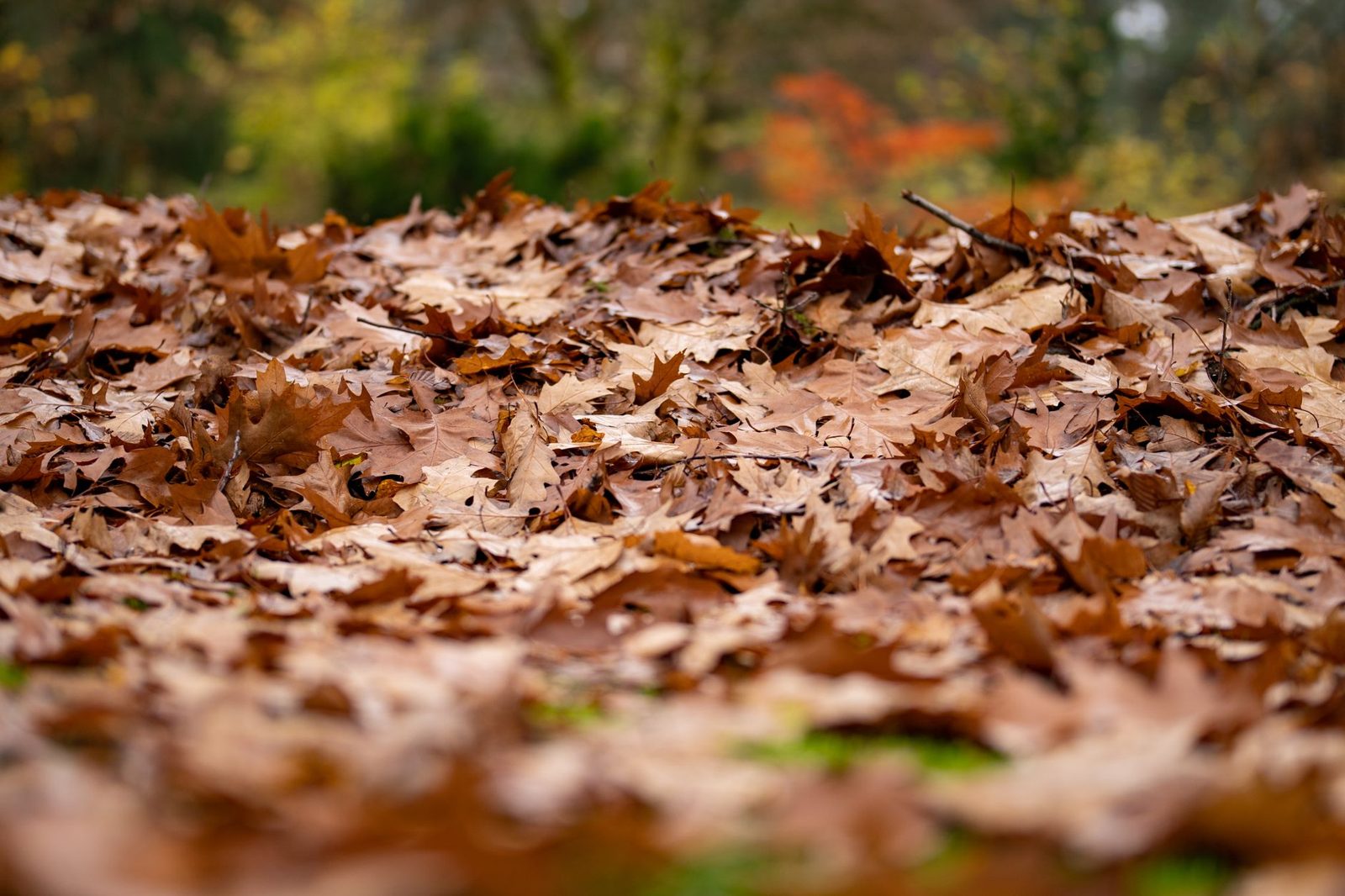
Don’t let leaves smother the lawn
A light scatter of leaves is harmless — but a thick, wet mat left all winter blocks light and air, traps moisture, and invites mold and snow-mold disease that leaves dead patches come spring. You don’t have to get every last leaf, but you do need to keep the grass from disappearing under a soggy blanket. The good news: the easiest method is also the best one for your lawn.
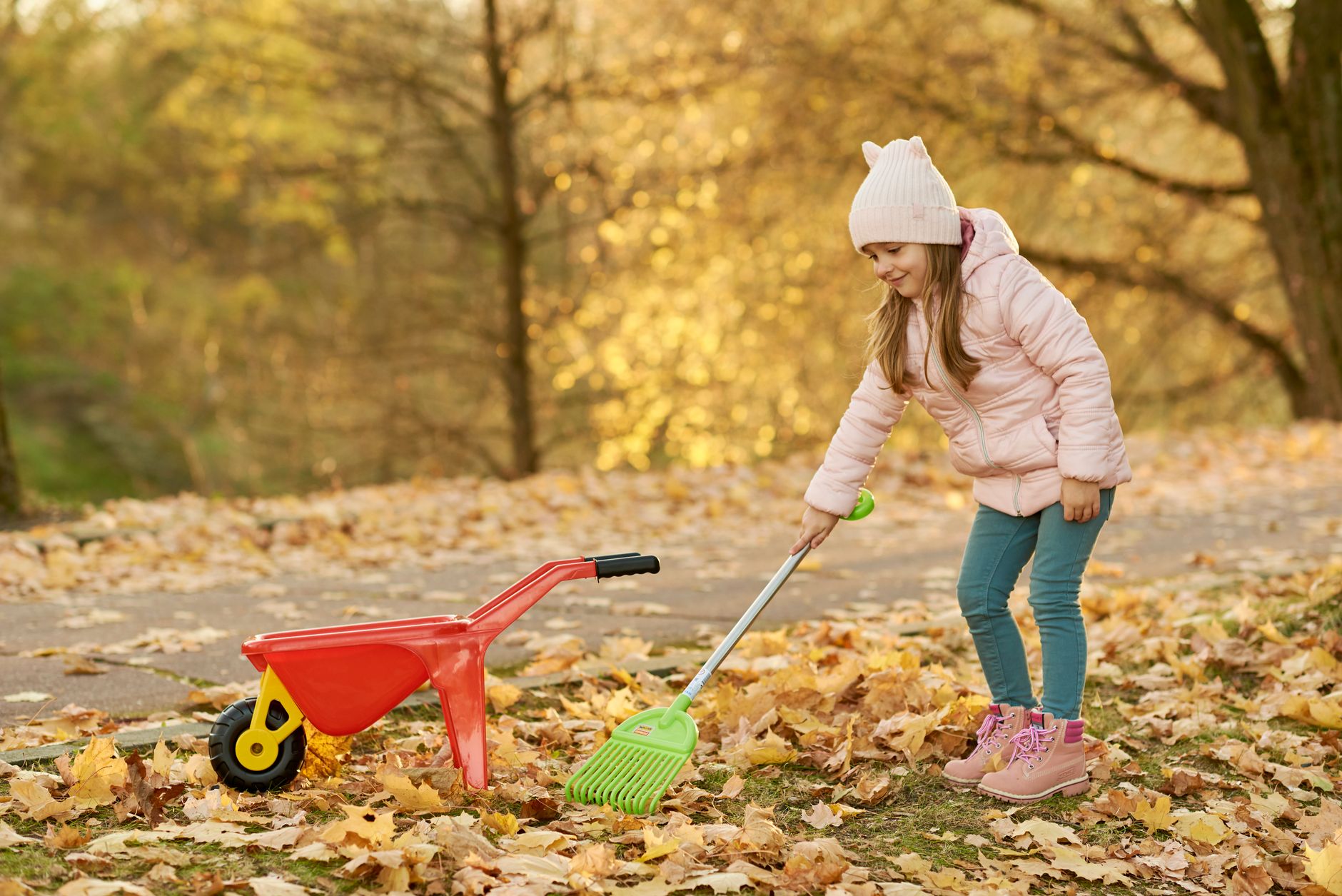
Rake, blow, or mulch-mow?
Three ways to handle it. Raking is free and quiet but hard on the back. A leaf blower is far faster for big yards and clearing beds, patios and gutters. But the smartest option for a light-to-moderate layer is to mulch-mow: run the mower over the leaves (a mulching blade helps) and chop them into confetti that falls between the grass blades and feeds the soil as it breaks down — free fertilizer, no bags.
As an Amazon Associate, Clearly earns from qualifying purchases — at no extra cost to you.
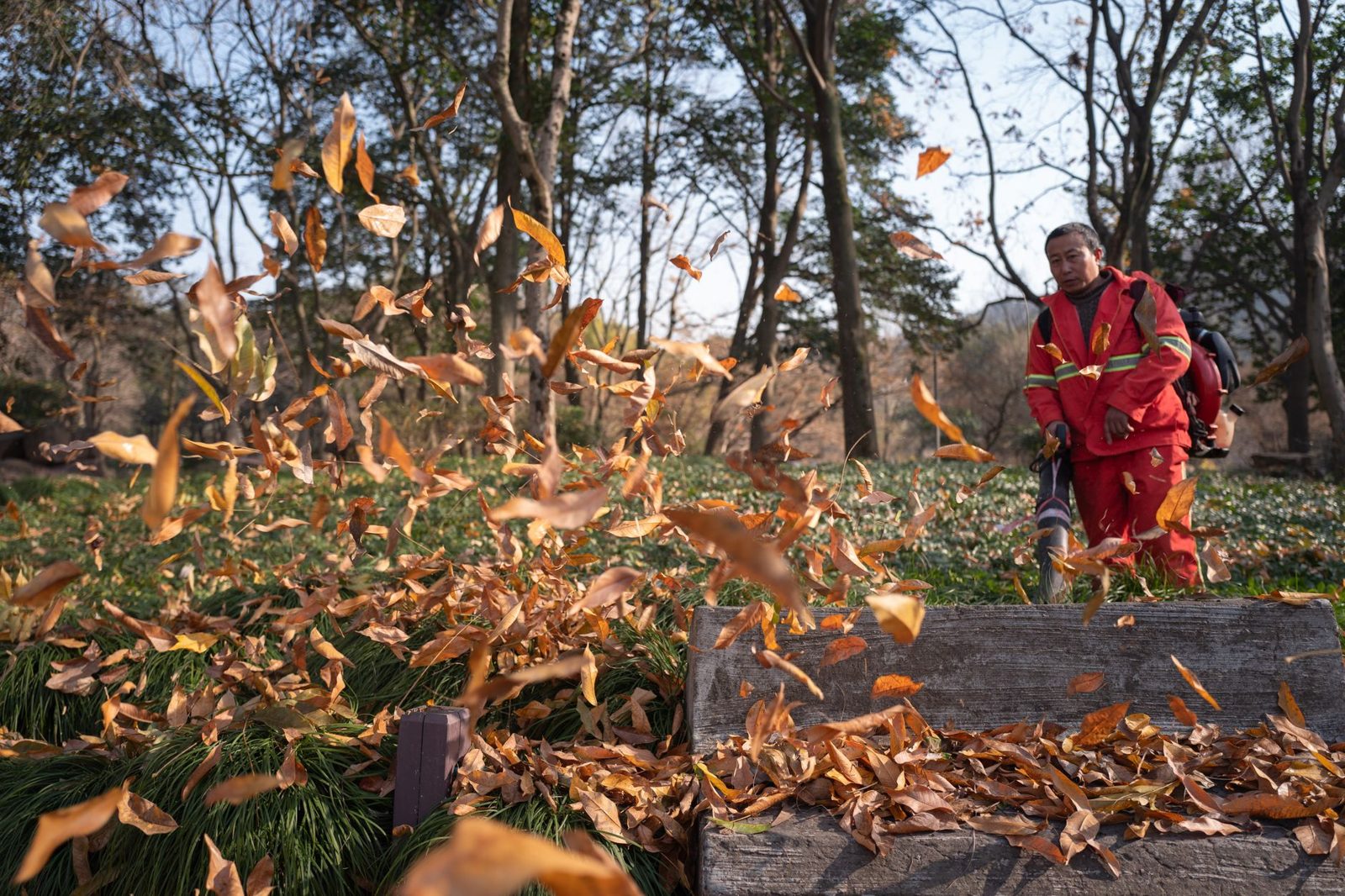
The right tools for the job
Match the tool to the yard. Small yard: a good leaf rake and a tarp to drag piles is all you need. Bigger yard: a cordless leaf blower (or a blower/vac that shreds as it collects) saves hours. Add a pair of leaf scoops (“leaf hands”) to grab piles without bending, and heavy-duty gloves. For serious leaf volume, a tow-behind or push lawn sweeper is worth it.
As an Amazon Associate, Clearly earns from qualifying purchases — at no extra cost to you.
Bagging and disposal
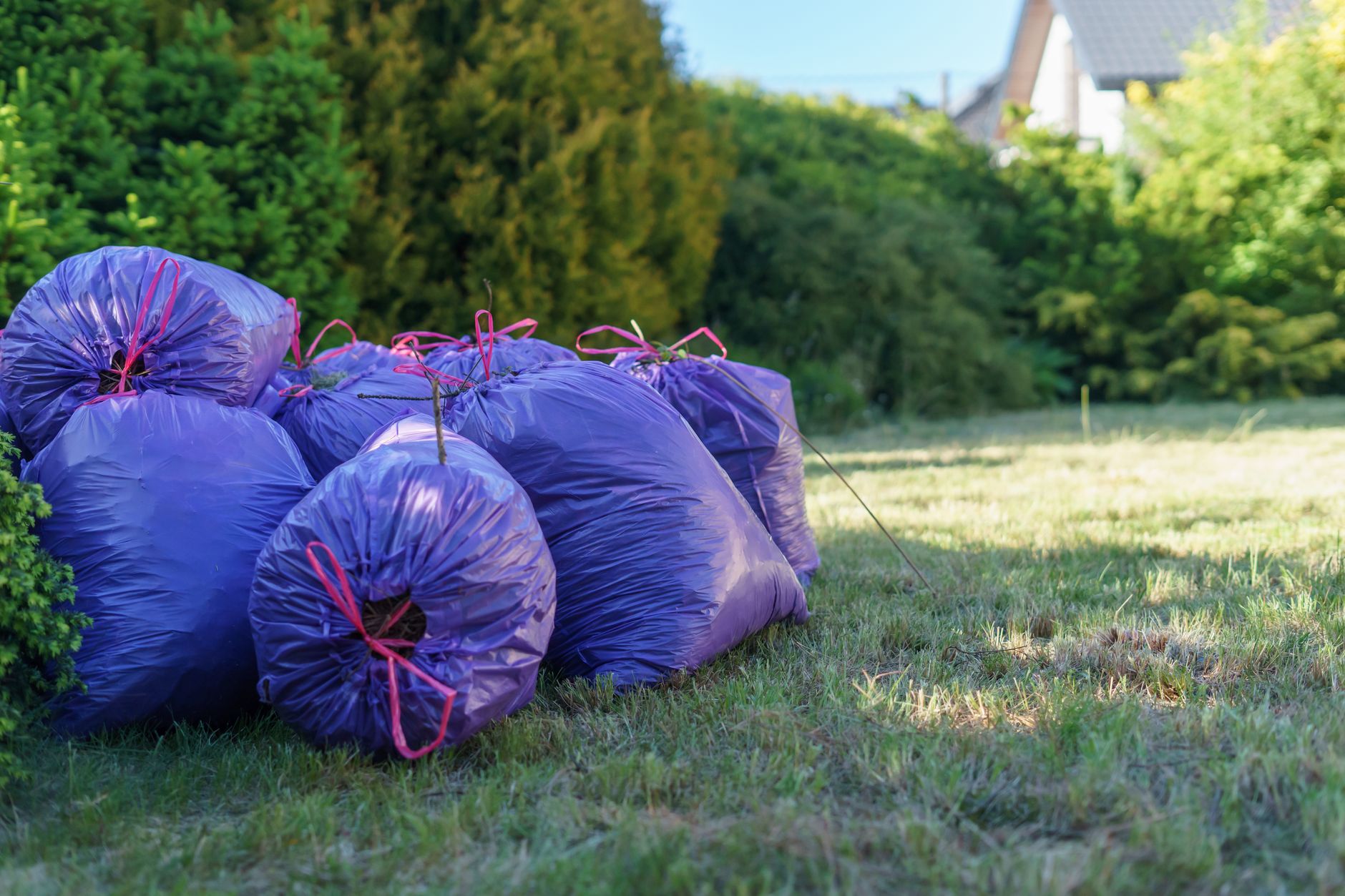
For what you do collect, check your town’s rules: many require paper lawn & leaf bags (they compost, unlike plastic) or offer curbside vacuum pickup on set weeks. A tarp is the unsung hero — rake or blow onto it, then drag a huge load to the curb or the compost pile in one trip. Better yet, start a compost or leaf-mold pile in a corner and turn this fall’s leaves into next year’s free garden soil.
As an Amazon Associate, Clearly earns from qualifying purchases — at no extra cost to you.
Leave a little for the garden
Resist the urge to strip the yard bare. A layer of shredded leaves makes excellent free mulch over garden beds — it insulates roots, suppresses weeds, and feeds the soil. Leaving some leaf litter in out-of-the-way corners also shelters pollinators and beneficial insects through winter. Clear the lawn and the walkways; let the beds and the back corners keep a blanket.
Our free Landscaper calculator sizes mulch and soil by the bag or yard, and the plant finder helps you pick what actually survives.
More home & yard tips
Practical, seasonal how-tos — and free calculators for every project.