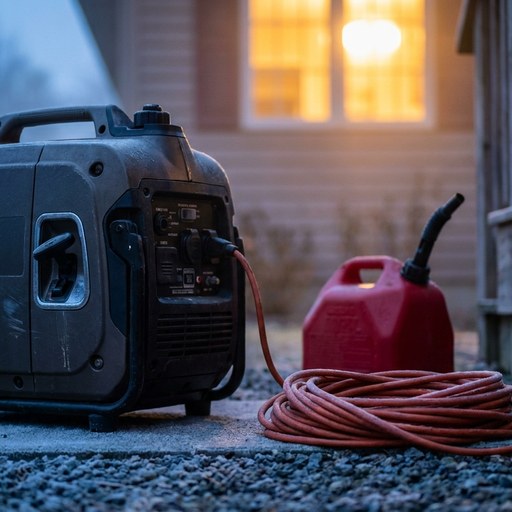
Every winter storm brings the same two kinds of emergency room visits after the power goes out: carbon monoxide poisoning from a generator or fuel-burning heater running in the wrong place, and fires from a space heater that was overloaded, tipped or left too close to something. Neither one is bad luck. Both are decisions made in the dark, in a hurry, by someone who never thought it through.
Early October is the right time to think it through, while the weather is mild, the hardware store is stocked and you can test everything in daylight.
Carbon monoxide: where a generator goes
A gas generator is a small engine that makes odorless carbon monoxide (CO) in large quantities. The rules that keep people alive are simple and not negotiable:
- Outside only. Never run a generator in a garage, basement, crawl space, shed or porch, even with the door open or a fan running. CO builds up faster than it clears.
- Far from the house. The usual guidance is at least 20 feet from the building, with the exhaust pointed away from every window, door and vent, including your neighbor’s.
- Dry, but not enclosed. Rain and snow shouldn’t reach the outlets, so use a purpose-made open-sided generator canopy or tent. A closed shed or box is the wrong fix.
- Working CO alarms, with battery backup. Put one on every level and outside sleeping areas, and replace the batteries now. Plug-in alarms with no battery do nothing in an outage.
Know the symptoms — headache, dizziness, nausea, weakness, confusion — and know they can be mistaken for the flu. If an alarm sounds, or several people feel sick at once, get everyone outside to fresh air and call 911. Don’t go back in to turn something off. Our smoke and CO detector check covers testing and replacement dates.
Size it, power it, feed it
Add up what you actually need. Add the running watts of the few things you can’t live without, then check the largest motor load, because motors draw a surge for a second or two when they start. The numbers below are typical; the label on your own appliance is the one to trust.
| Load | Running (approx.) | Startup surge |
|---|---|---|
| Refrigerator / freezer | ~700 W | 2–3x for a moment |
| Sump pump (1/3 hp) | ~800 W | up to ~2,000 W |
| Gas furnace blower | ~500–800 W | ~1,200 W or more |
| LED lights, phone chargers, router | 10–60 W each | — |
| Microwave | ~1,000 W | — |
| Electric space heater | 1,500 W | — |
A 3,500–5,000 watt portable covers the fridge, sump pump, furnace fan and lights, but not central electric heat, an electric dryer or a well pump and a space heater at once. Start the biggest motor first and add loads one at a time.
Use the right cord, or none at all. Use a heavy-duty, outdoor-rated extension cord, 12-gauge for runs up to about 50 feet, with a grounded plug, in good condition and not coiled up while it’s loaded. A thin cord overheats. And never plug a generator into a wall outlet to power the house (“backfeeding”): it energizes the lines outside and can kill a lineworker. Powering the house properly takes a transfer switch or an interlock kit installed by a licensed electrician. Our circuit-math article explains the 80% rule and why the cord gauge matters.
12-gauge outdoor extension cords →
Fuel: store it, stabilize it, refuel it cold. Keep gasoline in an approved container, outdoors in a detached shed or well-ventilated spot, away from ignition sources such as a water heater pilot. Untreated gas goes stale in a few months, so add a stabilizer when you fill up, and run the generator for about 15 to 30 minutes every month or two so the carburetor stays clean. Always shut it off and let it cool before refueling; spilled gas on a hot engine is a classic fire.
Fuel stabilizer and approved gas cans →
Portable heaters: pick the right kind
When the furnace is out, the safest heat is the heat you keep: close off a small room, hang blankets, and wear layers. If you do use a heater, the type decides the risk.
- Electric space heaters make no CO, so their danger is fire. Plug them straight into a wall outlet, never a power strip or a thin extension cord; keep 3 feet of clear space on every side; choose one with tip-over and overheat shutoff; place it on a hard, level floor; and turn it off when you leave the room or go to sleep.
- Fuel-burning heaters (kerosene, unvented propane) belong indoors only if the label says they are indoor-rated. Even then they need a cracked window, correct fuel (kerosene heaters take only the fuel they specify, never gasoline), and a working CO alarm.
- Never use a gas oven or range, a charcoal grill, a camp stove or an outdoor patio heater to heat living space. Those are the sources behind a large share of winter CO deaths.
A generator that runs the furnace blower is better heat than any of these, and the furnace should be serviced before cold weather anyway. If you heat with wood, our chimney and fireplace prep guide and firewood guide cover that side, and keeping pipes from freezing during a long outage is in our frozen-pipes guide.
Space heaters with tip-over shutoff →
A 20-minute outage dry run
Do this once this month: take the generator out, start it, run a cord to the fridge and a lamp, and confirm everything works. Check the oil, replace the fuel if it’s old, test your CO alarms, find your main breaker and flashlights, and write on a card which few things you’ll power first. If the generator won’t start in October, you’ll be glad to find out in October. Remember, too, that it is a temporary fix: if you’ll rely on one, spend an hour with a licensed electrician about a transfer switch.
As an Amazon Associate, Clearly earns from qualifying purchases.
Planning fall projects before the freeze?
Our free calculators work out the materials for deck, concrete, gravel and mulch jobs — no signup.